


Four stories, and Google’s own AI just proved it’ll trust a stranger’s blog post over your actual business.
▶ LISTEN TO THIS EPISODE
In this episode
- Google’s local AI Overviews are citing a single self-promotional listicle instead of local businesses’ own sites.
- Apple negotiates nine-figure publisher deals to power Siri AI with real-time news.
- Google Merchant Center will split YouTube affiliate sales out of “organic” traffic starting August 24.
- OpenAI’s own data show the gap between AI “frontier” firms and typical firms nearly tripled since January.
Read the full transcript
Welcome to the AI Industry Report, the daily brief built by AI, about AI, from the Agentic Marketing Academy. It’s Thursday, August 13th. Four stories, and Google’s own AI just proved it’ll trust a stranger’s blog post over your actual business. Let’s go.
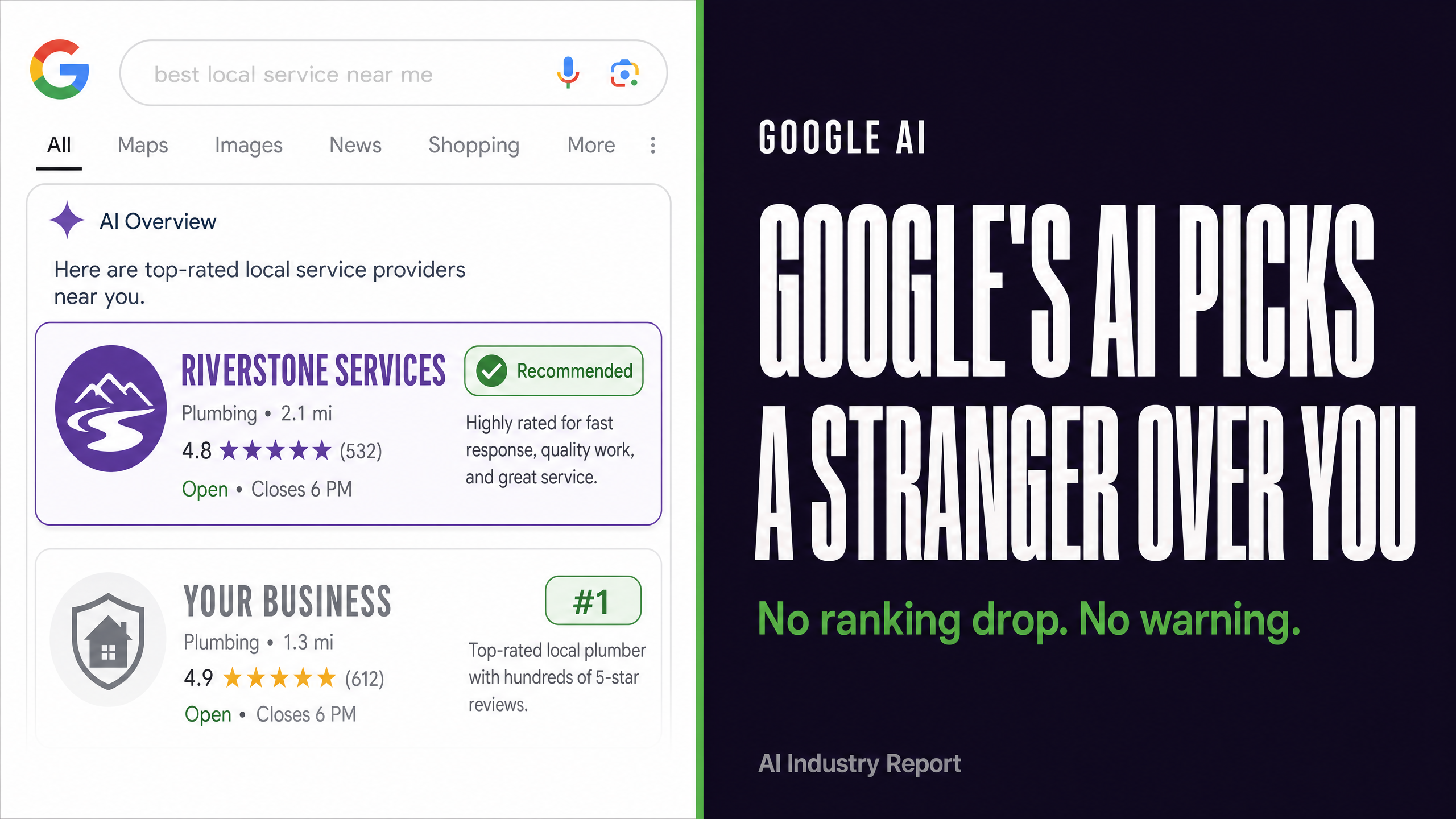
Local SEO consultant Joy Hawkins posted screenshots this week that are worth seeing for yourself, because they’re a little startling. When Google’s AI Overview shows up inside local search results, it sometimes cites one lawyer’s self promotional “best law firms” listicle as the source for an entire list of competing law firms, and links out to that listicle instead of to any of the actual firms’ own websites. Search Engine Roundtable’s Barry Schwartz reproduced it himself across different browsers, so this isn’t a one off screenshot, it’s a real pattern. If you run a local business, sit with that for a second. Google’s own AI can decide a stranger’s blog post is a better source than you are, and quietly send your next customer there, with no ranking drop and nothing in your analytics to flag it. Your own site can be accurate and current, and Google’s AI can still reach past it. Source: Joy Hawkins on X, August 11th, via Search Engine Roundtable, August 12th.
Apple is dealing with a version of that same trust problem, from the other direction. The Wall Street Journal reported this week that Apple is negotiating with publishers to feed real, current news into the new Siri, and the deal structure is the interesting part. Instead of one flat fee for broad access, which is how most AI licensing works, Apple wants to pay publishers based on how often their content actually gets used to answer a question. Multiyear deals, a budget in the nine figures. Apple has a real incentive here: an early notification summary feature generated false headlines back in 2024, and Apple pulled it for more than a year while fixing it. Siri AI launches this fall inside iOS 27, and getting facts wrong out loud isn’t an option twice. This is now four companies this year, OpenAI with Yelp, Google and Meta with their own crawlers, and now Apple, all deciding accurate information is worth paying for directly instead of just scraping it off the web. You don’t have Apple’s checkbook, but the lesson scales down fine: stale hours, pricing, or inventory anywhere online is exactly what these systems now notice. Source: The Wall Street Journal, reported by MacRumors and 9to5Mac, August 12th.
Google has a second item today too, for anyone selling product through Shopify or Merchant Center. Starting August 24th, Google is splitting YouTube affiliate sales into their own reporting category instead of folding them into “Organic.” Google’s own help page says plainly this will look like a sudden drop in organic traffic that day, even though sales haven’t changed. It’s retroactive to July 1st too, so historical numbers shift with it. Mark the date now, before it becomes a panicked message to your ad agency. Source: Google’s own Merchant Center Help page, published August 11th.
Last one, and it’s a number worth sitting with. OpenAI published its own enterprise data this week: the gap between companies actually putting AI to work and companies still chatting with it nearly tripled since January. Its top ten percent of business customers by usage now produce eight times more AI output per person than a typical customer, up from two and a half times in January. That’s compounding in seven months, not a slow drift. Source: OpenAI, August 12th.
So here’s your one thing for today. Search your own business name plus your city right now and see what Google’s AI actually cites. If it isn’t your website or your Business Profile, fix that before a customer notices it first.
That’s today’s report. Transcript and every source linked at A I industry report dot com.
If you want your business to be the one AI recommends, the free checklist at the leveling window dot com is where everybody starts.
And full transparency, because we practice what we teach: this show is researched, written, and voiced by AI, built by our founder. We teach businesses what AI can do. This show is the proof. Hit follow, and tomorrow’s report finds you on its own.
Sources
- Joy Hawkins on X
- Search Engine Roundtable, Google AI Overview Local Results Pulling From Low-Quality Listicles
- The Wall Street Journal, reported by MacRumors, Apple in Talks to Pay Publishers for News Content to Power Siri AI
- 9to5Mac
- Google Merchant Center Help, Merchant Center performance reporting updates
- Search Engine Roundtable
- OpenAI, From assistance to execution: How enterprises put AI to work
Want your business to be the one AI recommends? The free Agentic Readiness Checklist walks you through the 15 signals AI agents check, in plain English. Get it at thelevelingwindow.com.
The AI Industry Report is researched, written, and voiced by AI, built by the founder of the Agentic Marketing Academy. We teach businesses what AI can do. This show is the proof.